5th International Congress of Forum Herbulot, 24-28.v.2008
Zoologische Staatssammlung München (Bavarian State Collection of Zoology)
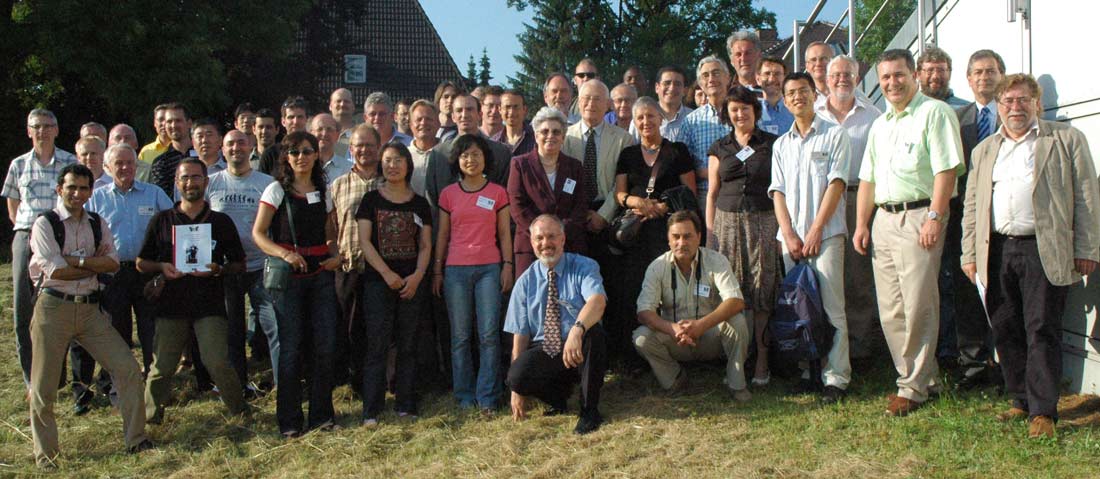
Zoologische Staatssammlung München (Bavarian State Collection of Zoology)
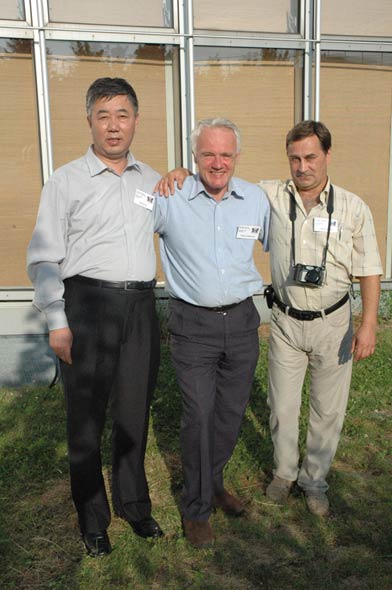
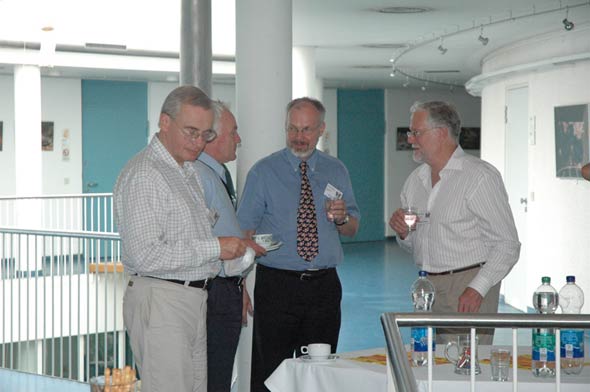
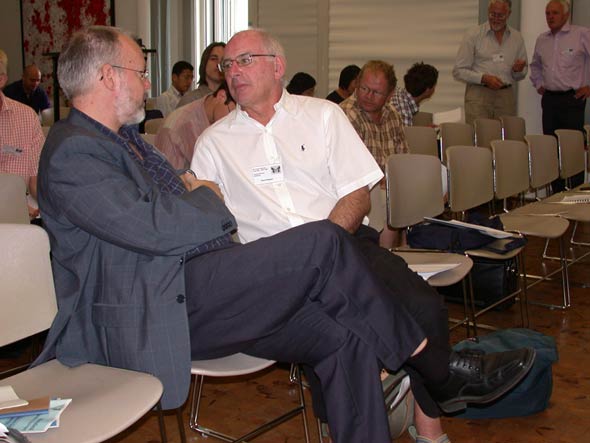
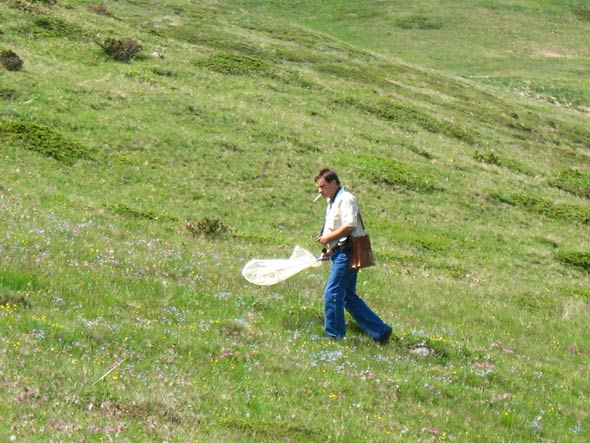
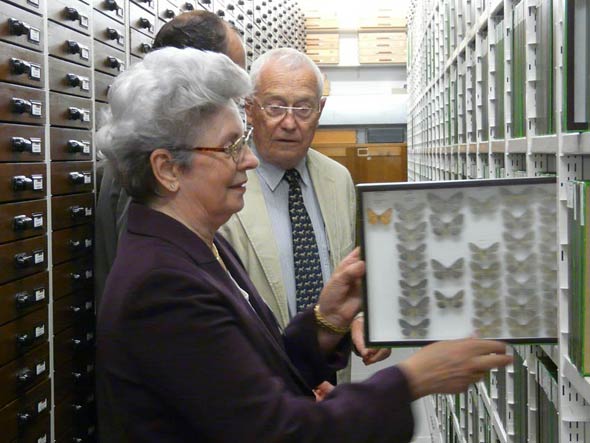
Participants
Baehr, Martin (Germany)
Behounek, Gottfried (Germany)
Beljaev, Evgeny (Russia)
Bläsius, Rolf (Germany)
Bodner, Florian (Bodner)
Buchsbaum, Mei-Yu (Germany)
Burmeister, Ernst-G. (Germany)
Can, Feza (Turkey)
Darge, Philippe (France)
Darge, Marie-Thérèse (France)
Delano, Lewis (USA)
deWaard, Jeremy (Canada)
Diller, Erich (Germany)
Diller, Juliane (Germany)
Erlacher, Sven (Germany)
Exposito, Andrès (Spain)
Fischer, Heinz (Germany)
Franz, Raimund (Austria)
Fritsch, Dieter (China)
Galsworthy, Anthony, (England)
Gottschaldt, Klaus (Germany)
Gräf, Carolin (Germany)
Han, Hongxiang (China)
Haszprunar, Gerhard (Germany)
Hausmann, Axel (Germany)
Hebert, Paul (Canada)
Herbulot, Colette (France)
Holloway, Jeremy D. (England)
Holloway, Pippa (England)
Infusino, Marco (Italy)
Karisch, Timm (Germany)
Kitching, Ian (England)
Knebelsberger, Thomas (Germany)
Knölke, Sonja (Germany)
Kopp, Andreas (China)
Lefranc, Patrick (France)
Leipnitz, Michael (Germany)
Lenz, Jürgen (ZW)
Lévêque, Antoine (France)
Lewandowski, Stefan (Germany)
Löbel, Hans (Germany)
Mironov, Vladimir (Russia)
Moser, Alfred (Brazil)
Nilsson, Danny (Denmark)
Ounap, Erki (Estonia)
Parra, Luis (Chile)
Petrányi, Gergely (Hungary)
Rajaei, Hossein (Germany
Ratzel, Ulrich (Germany)
Rougerie, Rodolphe (France)
Scalercio, Stefano (Italy)
Schmidt, Olga (Germany)
Schmidt, Stefan (Germany)
Schönitzer, Klaus (Germany)
Scoble, Malcolm (England)
Segerer, Andreas (Germany)
Sihvonen, Pasi (Finnland)
Skou, Peder (Denmark)
Sommerer, Manfred (Germany)
Sommerer, Gertraud (Germany)
Speidel, Wolfgang (Germany)
Staude, Hermann (South Africa)
Stöger, Isabella (Germany)
Strutzenberger, Patrick (Austria)
Stüning, Dieter (Germany)
Tarmann, Gerhard (Austria)
Viidalepp, Jaan (Estonia)
Wojtusiak, Janusz (Poland)
Wang, Changliu (China)
Wu, Chunguang (China)
Xue, Dayong (China)
Yamamoto, Satoshi (Japan)
Young, Cathy (Australia)
Zingerle, Vito (Italy)
Proceedings
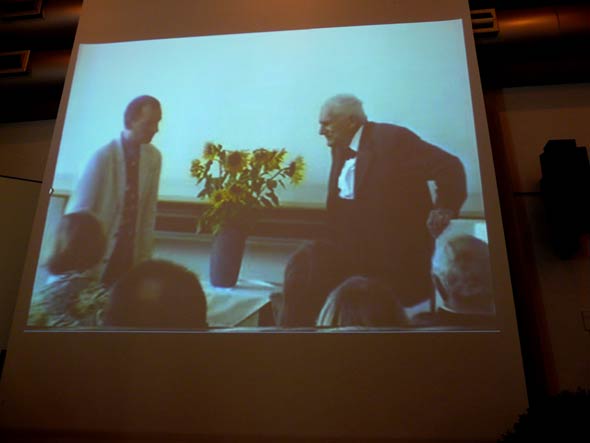
1. The fifth FORUM HERBULOT (see www.herbulot.de) started with a celebration of the centenary of the birthday of Claude Herbulot. A short video sequence, taken from Herbulot’s speech at the ZSM in 2000, was presented. The chairman pointed out briefly CH’s merits in geometrid research which, surprisingly at that time, already comprised even elements of “global strategies for plotting geometrid biodiversity in web-based databases”. Philippe Darge then highlighted the personality, life, and scientific achievements of his late friend CH in a touching personal manner, and welcoming the presence of Mme. Colette Herbulot. The participants expressed their high esteem of the scientific achievements of the late eponymous patron of the Forum. The research initiative FORUM HERBULOT was, once again, generally welcomed and the need for, and the advantages of, close scientific cooperation among geometrid experts were stressed.
2. The seminar session dealt with promising actual possibilities and new strategies for modern systematic research. The four sections were chaired by Malcolm Scoble, Paul Hebert, Cathy Young, and Axel Hausmann. a) The first session highlighted the new horizons opened up by web-based databases for an improved access to collection data. After an introductory talk on funding strategies (Sihvonen) three large-scale projects for imaging geometrid biodiversity (Holloway & Miller/NG, Staude/Africa, Löbel/Australia etc.) were presented. The session culminated in a wide ranging discussion of the CATE project on e-science and its meaning for geometrid taxonomy and systematics (Scoble, Kitching). Further mechanisms were agreed upon to develop interfaces between projects, and to collect and exchange digital images of, and information on, type specimens. b) FORUM HERBULOT 5 stressed the crucial role and the enormous impact of DNA barcoding for research on geometrids. The audience welcomed the concrete strategies and opportunities for barcoding geometrid diversity at a global scale as presented by Paul Hebert (CCDB, Canada), such as the ongoing international iBOL initiative with the challenging plan to barcode 80K Lepidoptera species, of which 15-20K would be geometrids. Experiences from the sphingid and saturniid campaigns, from old-type-sequencing (Rougerie), and from applications in forestry, biodiversity assessment, and nature conservation (deWaard) are encouraging. c) Deep phylogeny was a topic addressed by several stimulating talks involving molecular and/or morphological approaches (Õunap, Yamamoto, Young, Beljaev, Lévêque). The data sets (nDNA; mtDNA genes; skeleton-muscular system) from those studies confirm, once again, the position of the Larentiinae / Sterrhinae lineage as sister group to all other geometrids. As postulated and forecast by the previous FORUM HERBULOT congresses, the use of molecular methods has meanwhile much expanded and became a valuable tool for complementing the morphological and ecological data sets. FORUM HERBULOT 5 offered a platform for defining and refining the work plans in order to focus future common research on deepening the insight into the basic phylogeny of Geometridae. First results from a project on Gondwanaland relicts in Chile and Tasmania (Hausmann) encourage further development of a common integrated taxonomic approach for the study of the relationships of ‚southern clades’ (Tasmania: Young, McQuillan – Chile: Parra, Hausmann – South Africa: Krüger, Staude). d) Finally, the presentations of an array of projects on geometrid systematics, on biodiversity patterns, and on books in preparation (Lewis, Parra, Wojtusiak, Strutzenberger, Can, Mironov, Galsworthy, Wu, Han, Xue) were much appreciated. Conclusions: For the forthcoming two-years-interval until the next FORUM HERBULOT, it is planned to establish tools for e-science in Geometridae, to extend the DNA barcoding campaign Geometridae to a global scale, and to refine and improve the “the FORUM HERBULOT world list of family group names in Geometridae”, e.g. by considering new insights from molecular analyses and by extending the list from tribe to genus level.
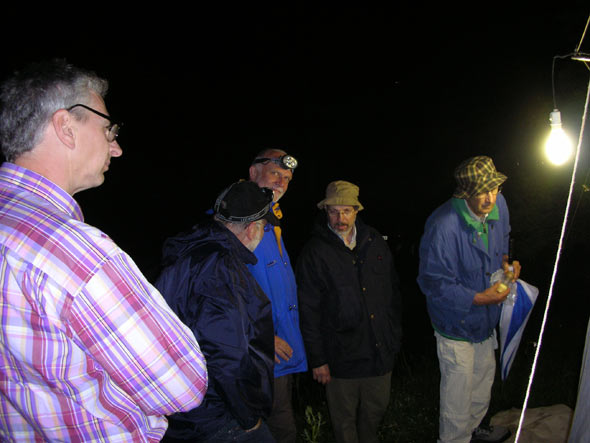
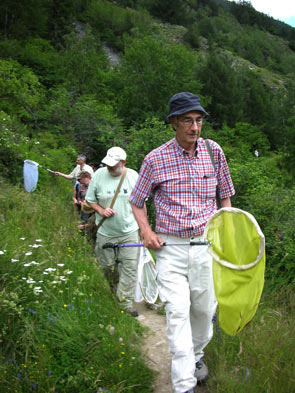
3. FORUM HERBULOT 5 offered a pleasant post-conference tour (June 26 – 28) to the SEL study area Sesvenna in Southern Tyrol (northern Italy) which was even featured in the local TV programme after an extensive ‘shoot’ and interviews on the lower steppe slopes. The collecting activities in the surrounding alpine and dry habitats yielded good results which will be communicated to the common database of TLMF Innsbruck and Nature Museum Bolzano. The 35 participants also enjoyed the opportunity to go on with discussions and work out plans for collaboration. The FORUM HERBULOT 5 came to an end with a guided visit to “Ötzi”, the famous “man in the ice”, at the Museum in Bolzano.
4. The chairman informed the participants of the sad news that Prof. Hiroshi Inoue, honorary member of the FORUM HERBULOT, had passed away a few days ago. The participants honoured this outstanding and great old colleague and friend by signing a book of condolence at the ZSM.
5. A proposal to have the next FORUM HERBULOT 6 in Gainesville, Florida, in 2010 (June 22- 23), was generally welcomed. Chairman reported that future venues have been suggested by the museums in Pretoria (South Africa) and Concepción (Chile).
6. Participants expressed their thanks to the organizers and sponsors of the FORUM HERBULOT 5 (2008).
Munich, 26.6.2008
Dr. A. Hausmann, Zoologische Staatssammlung München, Germany. – Dr. J.D. Holloway, The Natural History Museum, London, U.K. – Dr. M. Scoble, The Natural History Museum, London, U.K. – M. Sommerer, Volpinistr. 73, München, Germany. – Dr. C.J. Young, Dept Primary Industries, Water and Environment Hobart, Australia.
Programs
Tuesday, June 24, 2008
Opening at the ZSM 14.00: Axel Hausmann (Germany) & Philippe Darge (France): Claude Herbulot Centenarian – an appreciation (with video sequence)
Short break
Seminary Session: Workshop focus (1): Databases of type-specimens and taxonomy data (CATE): chair Malcolm Scoble
15:00 Pasi Sihvonen (Finland): Taxonomic research: perspective from a research funding organisation
15:15 Jeremy D. Holloway (U.K.): GONGED (Geometridae of New Guinea Electronic Database): A progress report on development of an online facility of images (& Scott E. Miller, David M. Pollock, Karolyn Darrow & Lauren Helgen)
15:30 Hermann Staude (Südafrika): Distributing Lepidops©- A test case for sharing virtual museums and other data.
15:45 Hans Löbel (Germany): The illustrated html-database „Geometrid Moths of Australia“ as a model for the collective project of the ZSM „Geometridae mundi“
16:00 Malcolm Scoble & Ian Kitching (U.K.): Creating a Taxonomic E-Science (CATE)
Coffee break
Seminary Session (varia, South America)
17:30 Axel Hausmann (Germany): Hunting for Gondwanaland relicts: the Geometridae of the Nothofagus forests of Tasmania and Chile
17:45 Lewis Delano (U.S.A.): Revision of the genus Cyllopoda 18:00 Janusz Wojtusiak (Poland): Diversity of Lepidoptera in the Andean cloud forest of Ecuador with special reference to the family Geometridae and Noctuidae - a research project of the Zoological Museum Jagiellonian University, Krakow in 2002-2005 (& Rafał Garlacz)
18:15 Luis Parra (Chile): Diversity of Geometridae of Chile with presentation of some particular cases and examples
Congress dinner (address of welcome, Prof. G. Haszprunar, director of the Bavarian Natural History Collections)
Wednesday, June 25, 2008
Seminary Session: Workshop focus (2): DNA-barcoding strategy: chair Paul Hebert
9:00 Paul Hebert (Canada): The International Barcode of Life Project (iBOL)
9:30 Rodolphe Rougerie (Canada): Global DNA barcoding campaigns in Lepidoptera: lessons from sphingid moths (& J. Haxaire, I.J. Kitching, T. Vaglia, P. Basquin, R. Brechlin, P. Darge, U. Eitschberger, T. Melichar, J. Pierre, P.D.N. Hebert)
9:45 Jeremy deWaard & Leland M. Humble (Canada): DNA barcodes and monitoring forest health Coffee break
Seminary Session: Workshop focus (3): Molecular phylogeny and taxonomy: chair Axel Hausmann 11:00 Erki Ounap, Vladimir Mironov & Jaan Viidalepp (Estonia, Russia): On the systematic position and molecular phylogeny of Lythria Hübner (Lepidoptera: Geometridae: Sterrhinae)
11:15 Patrick Strutzenberger (Austria): DNA barcoding and molecular phylogeny of Eois moths (Geometridae) from southern Ecuador (Gunnar Brehm, Florian Bodner, Manuela Zimmermann, Martin Wiemers and Konrad Fiedler)
11:30 Feza Can & Axel Hausmann (Turkey, Germany): A new Turkish Scopula species, synthesis of morphological and molecular data Small Bavarian lunch at the ZSM
Seminary Session: Workshop focus (4): Deep phylogeny: chair Catherine J. Young
15:00 Satoshi Yamamoto (Japan): Molecular phylogeny of Geometridae and the evolution of winter moths (& Teiji Sota)
15:15 Antoine Lévêque (France): Phylogeny of the subfamily of Ennominae (Lepidoptera, Geometridae) study of the tribes based on both morphological and molecular approaches
15:30 Evgeny Beljaev (Russia/Vladivostok): Phylogenetic relationships of the families and subfamilies of geometroid lepidopterans (Lepidoptera: Cimeliidae, Epicopeiidae, Sematuridae, Drepanidae, Uraniidae, Geometridae)
15:45 Catherine J. Young (Tasmania): Evolutionary relationships within the Australian Geometrinae - Research Update
Coffee break
Seminary Session (varia, Asia)
17:00 Anthony Galsworthy & Vladimir Mironov (U.K.-Russia): Short report on the working progress on the systematics of the tribe Eupitheciini
17:10 Hongxiang Han & Xue Dayong (China): The geometrine moths of China
17:25 Chunguang Wu, Hongxiang, Han & Dayong, Xue (China): A study on the Genus Glaucorhoe Herbulot, with descriptions of two new species from China (Lepidoptera: Geometridae: Larentiinae)
17:40 Short presentations
Conclusion, strategies for next two years, date, venue of Forum Herbulot 2010
Dinner and meeting the other participants is possible on Wednesday June 25 (such as on Monday June 23) in Restaurant Giuseppe Verdi, Verdistr.
Posters: Rodolphe Rougerie et al.: Successful combination of DNA barcoding and morphology to discriminate and describe new species of saturniid and sphingid moths
Post-conference tour to Sesvenna region in South Tyrol (upper Val Venosta; Italy)
Thursday, June 26, 2008
Departure in Munich/ZSM at 8.00, Arrival Burgeis/Sesvenna at about 12.30
Afternoon: excursion to, and collecting at, high mountain
areas nearby; with discussions and workshops Dinner at Gasthof Gerstl: address
of welcome Evening: light-trapping where suitable Friday, June 27, 2008
All day: excursion to, and collecting at, high mountain areas nearby; with
discussions and workshops
Dinner at Gasthof Gerstl Evening: light-trapping where
suitable
Saturday, June 28, 2008 Departure from
Burgeis/Sesvenna to Bolzano at about 10.30 Guided visit of the museum Bolzano
(man in the ice “Ötzi”)
11:45 Departure from Bolzano to Munich at about 13.00 Arrival by 17.00